
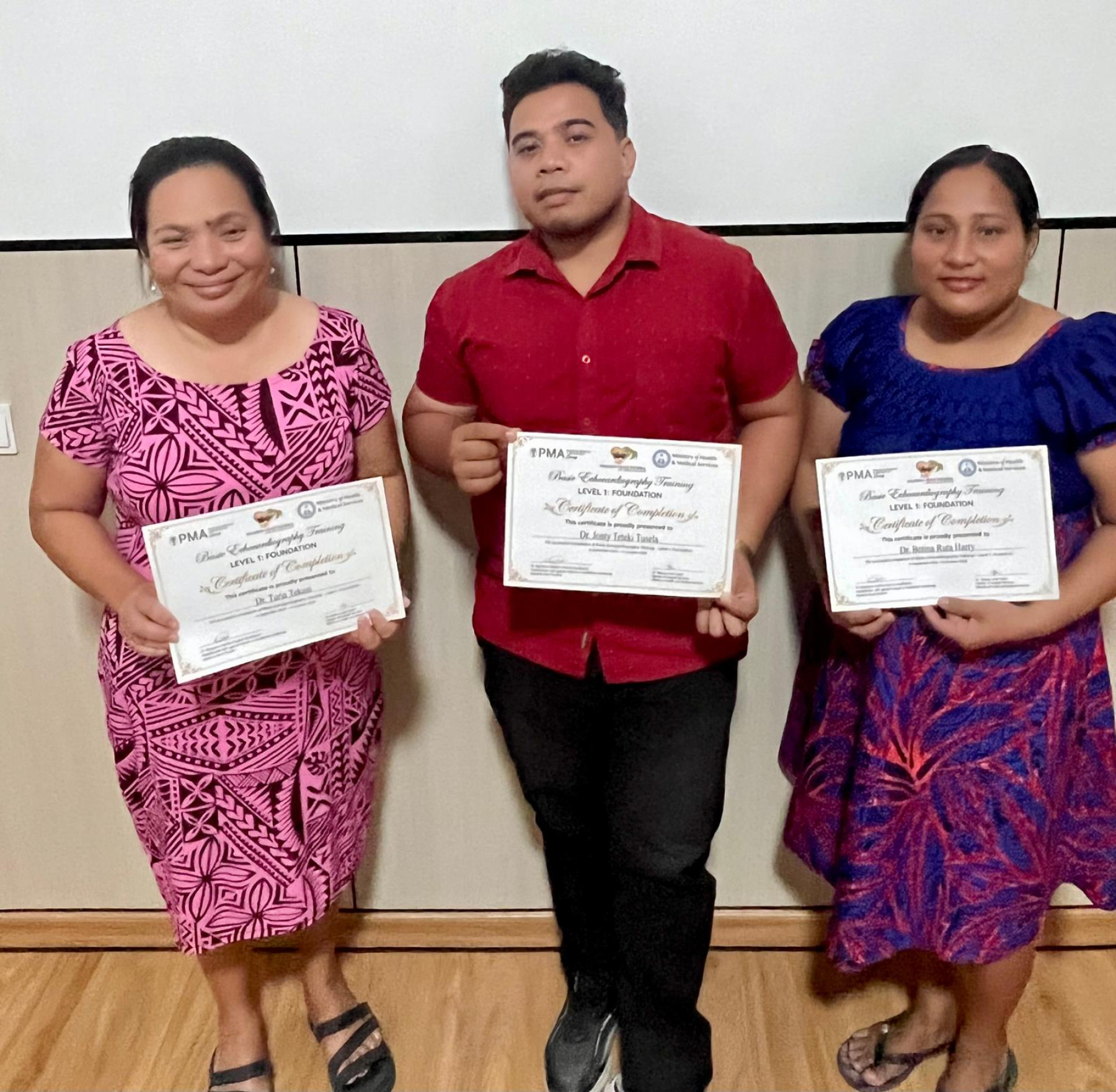
Working alongside the paediatric team at Tungaru Central Hospital, Dr Koraai delivered specialised echocardiography training aimed at strengthening the team's ability to identify rheumatic heart disease (RHD) and congenital heart disease (CHD).
Her visit combined two weeks of structured training with two weeks of supervised echocardiography screening at two primary schools. She also supported daily ward rounds, inpatient care and on-call duties, gaining a deeper understanding of the challenges faced by local health professionals.
For Dr Koraai, building these skills locally is particularly important in Pacific Island nations where access to specialist cardiac services can be limited.
“Echocardiography is an essential skill in our Pacific healthcare settings, where children with cardiac conditions need timely assessment. We cannot always afford to wait months or longer for a visiting specialist team to arrive, particularly when early diagnosis and treatment can prevent disease progression and serious complications.”
Despite demanding clinical responsibilities, including on-call duties across two hospitals, the trainees achieved 100% attendance throughout the programme.
“I gave my 100% to the training, and the trainees matched that commitment with their enthusiasm and willingness to learn. It was encouraging to see their dedication.”
Local paediatric registrar Dr Jonty Tusela said the training has added value to his skillset.
“I am very grateful to have been part of this training, as it was my first experience using an echocardiography machine, and I look forward to continuing to learn and develop my skills.”
This was reiterated by local medical registrar Dr Meritima Atanteora, who said “it has enhanced my echocardiography skills and strengthened my confidence in diagnosing rheumatic heart disease.”
Through the NZMTS, Dr Koraai has been supported to undertake several visits to Kiribati over the years, contributing to ongoing efforts to strengthen local clinical capabilities and health programmes, including the Rheumatic Heart Disease Programme.
This latest training builds on that work, with echocardiography machines previously procured for the Ministry of Health through NZMTS playing an important role in enabling hands-on training and supporting local clinicians to continue practising and applying their skills. Through her visits, Dr Koraai has also developed a deeper appreciation of the local healthcare workers.
“I salute their dedication and commitment to serving the people of Kiribati, often while working under considerable pressure and with limited resources.”
The impact of the training is expected to extend well beyond this visit. The paediatric team is planning to establish weekly echocardiography clinics and Dr Koraai will provide them with ongoing remote mentorship.
“Ultimately, the goal is to strengthen local capacity, improve early detection and referral, and build a more sustainable paediatric cardiac service for the children of Kiribati.”
Supported by the New Zealand Ministry of Foreign Affairs and Trade and coordinated by the Pasifika Medical Association Group, the NZMTS remains dedicated to building resilient health systems and strengthening specialist capability across the Pacific region. The views expressed in this publication do not necessarily reflect those of the New Zealand Government.