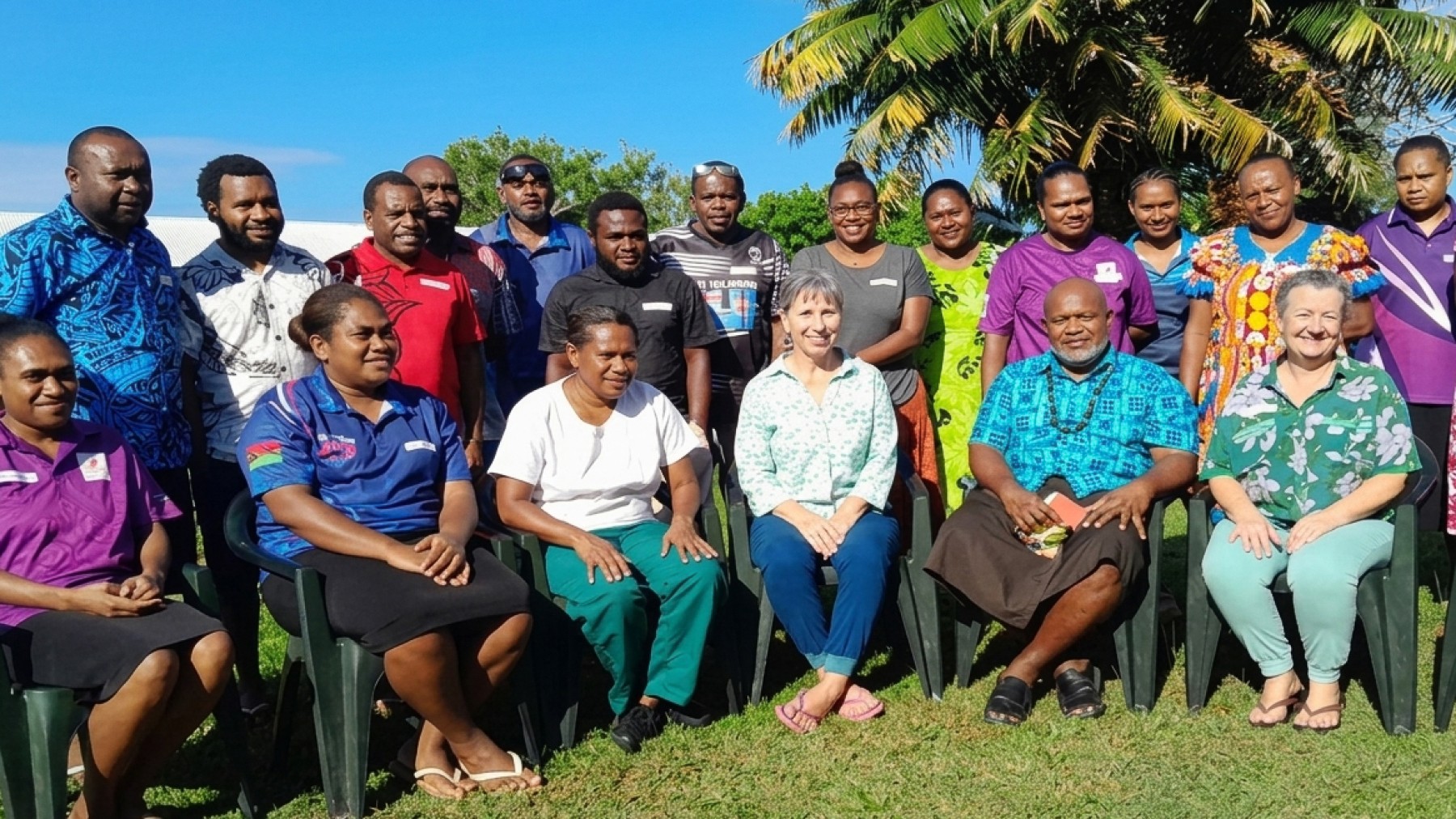
The 10-day programme combined the World Health Organization's Basic Emergency Care (BEC) course with Pacific-specific training designed for nurses working in remote and resource-limited settings. Alongside strengthening frontline clinical skills, the deployment focused on identifying and mentoring local trainers to ensure emergency nursing education can continue to grow across Vanuatu long after the training concluded.
As part of the deployment, emergency nurses Bronwen (Bron) Griffiths and Angela (Angie) Gittus worked alongside frontline clinicians to deliver the training and support long-term local capacity.
They said PENT was developed to support the realities of emergency care across the Pacific.
“PENT recognises that there are many common presentations and health challenges across the region, often met by clinicians working in isolated clinics where a broad health understanding, as well as effective front line skills, are required.”
The programme aims not only to strengthen frontline clinical skills, but to help local clinicians build safer systems of care within their own communities, they added.
“By equipping participants with effective frontline skills in recognition and initial treatment of life threatening conditions, as well as the ability to communicate their findings and concerns in a structured way, we hope to support local clinicians to provide safer care to their communities.”
They shared that participants described the training as helping them feel more prepared and confident to manage emergencies, with many expressing a desire to see the programme expanded across all provinces.
“Pacific clinicians feel an enormous weight of responsibility to provide the best care for their communities that they can. Their determination to provide positive outcomes for their patients despite facing a daunting array of complex challenges is a constant source of inspiration in our own clinical practice.”
Reflecting on the deployment, both Bron and Angie said working alongside Pacific colleagues has been one of the most rewarding parts of their career.
“It has been the highlight of our nursing and education careers to be sharing skills and facilitating capacity building alongside our Pasifika EC colleagues over the last ten years.
“Our role in the process of growing their competence and confidence in providing locally relevant best practice care is part of a collegial exchange that is characterised by mutual respect and two way learning.”
**
Supported by the New Zealand Ministry of Foreign Affairs and Trade and coordinated by the Pasifika Medical Association Group, the NZMTS remains dedicated to building resilient health systems and strengthening specialist capability across the Pacific region. The views expressed in this publication do not necessarily reflect those of the New Zealand Government.