
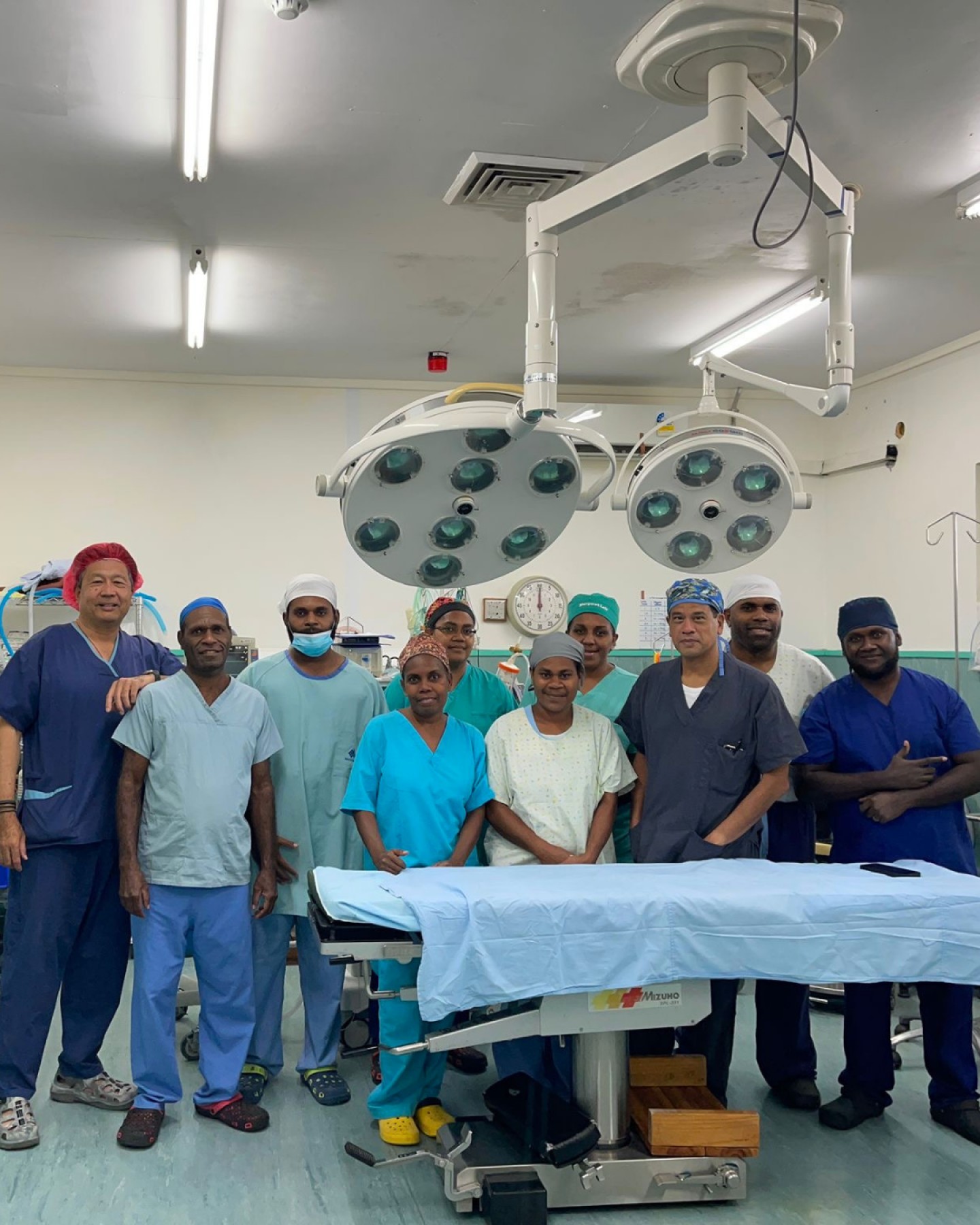
Last month, Obstetrician and Gynaecologist Dr Richard Foon led a specialist medical team to Vanuatu as part of the New Zealand Medical Treatment Scheme (NZMTS), providing much needed urogynaecology care, surgery and training across two hospitals.
The team spent five days at Northern Provincial Hospital in Luganville, Santo, and five days at Port Vila Central Hospital on Efate. Dr Foon was joined by a physiotherapist and anaesthetist, with the team working alongside local multidisciplinary health professionals.
The visit was designed not only to provide specialist treatment, but to strengthen local capability and support Vanuatu’s health workforce to become increasingly self-sufficient in managing pelvic floor conditions.
“We were able to achieve all the objectives that were set out at the beginning of the visit,” Dr Foon says.
Across the two hospitals, the team saw approximately 22 patients in specialist clinics and performed a range of complex procedures, including anterior and posterior repairs, vault prolapse procedures, vaginal hysterectomies, repair of chronic fourth-degree tears and surgery for an ovarian cyst.
Some of the most significant cases were those involving chronic childbirth-related injuries that are rarely seen in New Zealand.
“Getting the opportunity to treat these patients and understand the reasons why these conditions occur in Vanuatu was a great learning experience and privilege for me,” he says.
Building local capability
A key part of the visit was sharing specialist knowledge with local doctors, nurses, midwives and other health professionals.
Teaching sessions covered urogynaecology, women’s health physiotherapy, and anaesthetic ethics and management, while three-hour perineal trauma workshops provided doctors and midwives with both theoretical learning and practical suturing experience.
The physiotherapist also worked alongside the local physiotherapist, supporting both pre- and post-operative patients while building knowledge in women’s health physiotherapy.
In Santo, where anaesthetic cover at the Northern Provincial Hospital is provided by two nurses and there is no resident anaesthetist, the visiting anaesthetist was also able to provide support for other surgical procedures.
For Dr Foon, the value of the trip extended well beyond the procedures performed.
Working in a low-resource environment brought challenges, from language barriers and limited medical equipment to the need to improvise — experiences he says will contribute to his own development as a doctor and surgeon.
Just as importantly, he says the team gained a greater understanding of the social, cultural and economic circumstances that shape health care in Vanuatu.
“The local team in Vanuatu were very helpful, fun to work with and very supportive,” he says.
The positive feedback from both patients and local health professionals reinforced the importance of the visit, with the team hopeful that the training and support provided will help strengthen the identification and treatment of serious perineal injuries in the future.
**
Supported by the New Zealand Ministry of Foreign Affairs and Trade and coordinated by the Pasifika Medical Association Group, the NZMTS remains dedicated to building resilient health systems and strengthening specialist capability across the Pacific region. The views expressed in this publication do not necessarily reflect those of the New Zealand Government.